Wint Wealth Did Not Chase the Equity Wave. It Built a Market
Nobody Else Wanted to Touch

This Week's Highlights
5 Top Manufacturing Startups To Watch

How Flo Mobility Is Bringing AI-Powered Robots to India's Construction Sites

Bad Skin Day Billion Dollar Idea: The Yes Madam Story

How Frostreats Turned A Simple Idea Into ₹14 Crore Business
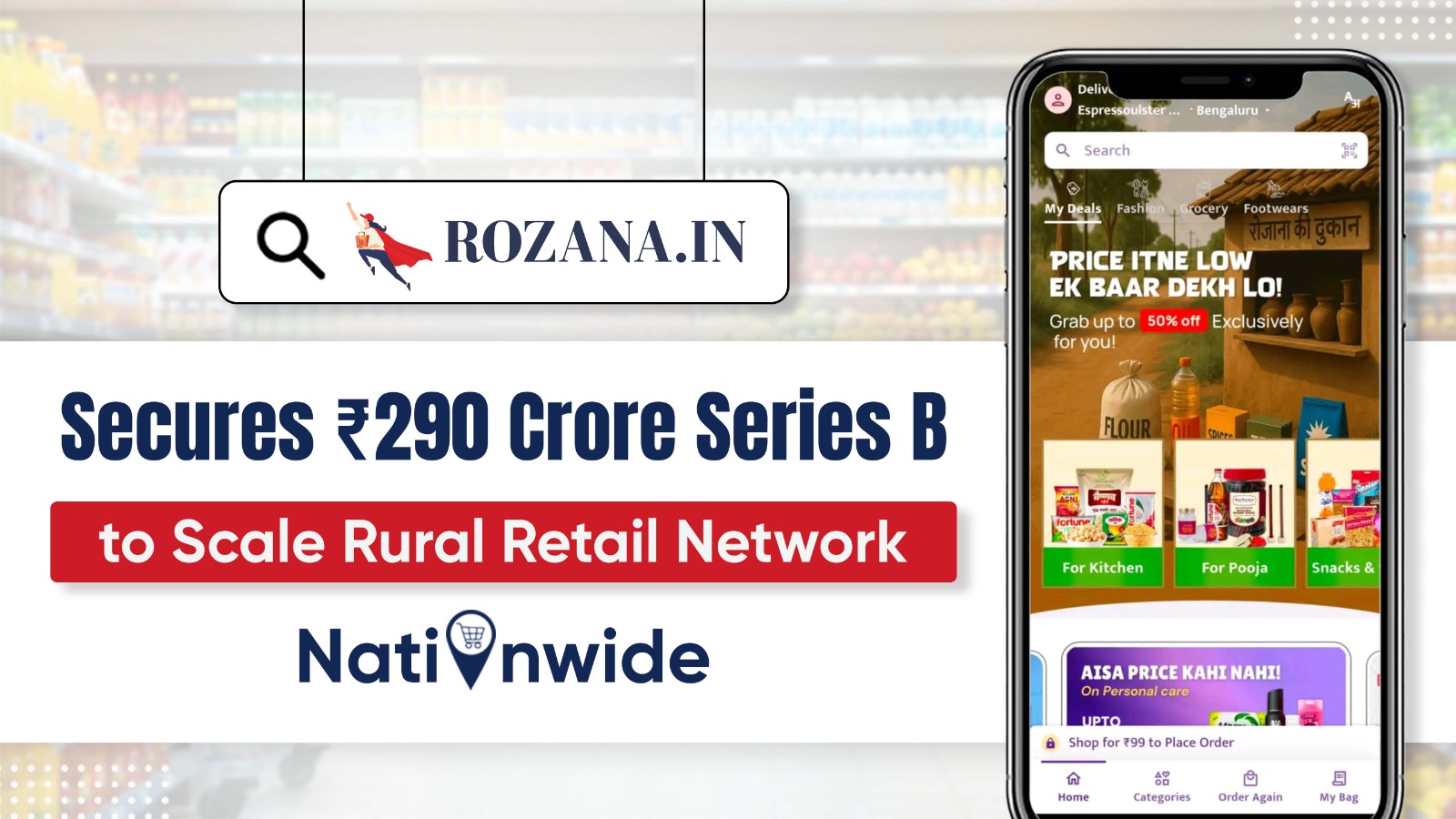
Secures ₹290 Crore Series B To Scale Rural Retail Network

How Pilgrim Achieved 24x Growth In The Beauty Industry?
For most of the last decade, India's investing story was told through one lens: equities.
Discount brokerages made stock market access frictionless. Demat accounts multiplied. The pandemic brought in a wave of first-time investors who learned to trade on their phones. Platforms like Groww and Zerodha turned investing into a mobile-first habit, and mutual funds rode the same wave through SIP-led distribution.
The result was a generation of retail investors who understood equities but knew almost nothing about bonds.
This is not a small gap. In most mature financial systems, bond markets are deeper and more stable than equity markets. They provide predictable returns, lower volatility, and serve as a core allocation for both individuals and institutions. In India, however, the bond market evolved almost entirely as an institutional playground. Retail investors had little access, limited understanding, and no intuitive platform to engage with.
The alternatives were uninspiring. Fixed deposits dominated conservative portfolios but rarely kept pace with inflation. Debt mutual funds added layers of abstraction. Corporate bonds, which could have offered a compelling middle ground with higher yields and defined maturities, remained out of reach for most retail investors due to high ticket sizes, fragmented discovery, and a deep distrust of issuers.
Wint Wealth was built to change that.
Starting With Conversations, Not a Platform
The first version of Wint Wealth was not really a platform at all.
There was no seamless onboarding flow. No automated investment journey. The founders started by calling people they knew, explaining what bonds were, and manually facilitating transactions. "We were calling our friends, showing what we had. And asked if they would like to buy," co-founder Kulkarni recalls.
Even when a basic digital presence was introduced, it functioned more as a lead-generation layer than a transactional interface. Users could leave their contact details and the team would call them back, walking them through the process step by step. Settlements were handled offline. The experience was far from scalable.
But it served a critical purpose. It validated intent. Real people were willing to invest in bonds if someone they trusted explained the concept clearly enough.
Trust was the central challenge. Corporate bonds offering higher-than-FD returns naturally made people skeptical. The question was not just about returns but about credibility. Why should a retail investor trust a relatively unknown platform with their money in a category they barely understood?
The founders responded in an unusually direct way. Instead of hiding behind product interfaces, they made themselves personally accessible. "We had a Zoom button on our homepage. If you booked a Zoom call, one of us would join." In a trust-deficit category, that level of transparency became a powerful differentiator.
The Insight That Changed the Strategy
One of the earliest and most important lessons came from observing who was actually converting.
The initial assumption was that bonds would appeal to conservative, first-time investors who were hesitant to enter equities. The actual user behaviour told a different story.
"We quickly figured out that people who liked this product were those who were already invested in equities," Kulkarni says. These users were not beginners. They were financially aware, understood market volatility, and were looking for diversification rather than an entry point into investing.
That realisation changed everything. Wint Wealth stopped trying to be an onboarding platform for new investors and repositioned itself as a complementary layer for an existing, financially literate user base. It was a significant strategic pivot and one that sharpened the product, the messaging, and the acquisition approach in one move.
Distribution, in the absence of large marketing budgets, leaned heavily on content. The founders began publishing insights on fixed-income investing, breaking down complex concepts into accessible narratives. It built credibility and quietly became a key acquisition channel.
"First 100 were through contacts, and 1,000 through LinkedIn," Kulkarni says.
Building Trust at Scale
As Wint Wealth moved beyond its initial cohort, the challenge shifted from validation to scalability.
One of the most consequential decisions was how to position the platform. Rather than becoming a marketplace that simply aggregates and lists bonds, Wint Wealth chose a curated approach. Every bond listed on the platform goes through internal evaluation. More importantly, the company co-invests alongside users in every bond it sells.
"We don't operate like a marketplace. Every bond we sell, we co-invest. We are also putting in our money," Kulkarni explains. This skin-in-the-game model addressed the skepticism that naturally surrounds high-yield fixed-income products and gave users a concrete reason to trust the platform's judgment.
Distribution evolved in parallel. Content remained the foundation, but referrals became a significant growth driver, followed by influencer-led brand building and eventually performance marketing. Paid acquisition was layered on top of an already credible base rather than used to compensate for a lack of trust.
The business model is straightforward. Wint Wealth earns roughly 1% commission on every bond sold. With monthly bond sales hovering around Rs 600 Cr, that translates into a steady and compounding revenue stream. The payback period on customer acquisition consistently stays under 12 months. Annual revenue per user sits in the Rs 3,000 to Rs 4,000 range, with high repeat behaviour keeping marginal costs low.
The financial results reflect this discipline. In the fiscal year ended March 2025, operating revenue grew 2.6 times to Rs 44.5 Cr from Rs 17.2 Cr in FY24, while losses narrowed by over 60% to Rs 8.2 Cr.
Regulatory development has supported this growth. When Wint Wealth started, there was no specific framework governing online bond platforms. Over time, regulations were introduced that brought structure and legitimacy to the category. "The regulators have been greatly supportive. They wanted to develop the bond market," Kulkarni says.
Beyond Bonds: The Wealth Management Ambition
Having established itself as the leading retail bond platform in India, Wint Wealth is now entering its next phase.
Following a Series B funding round, FY26 marks what the founders describe as a deliberate pivot toward aggressive growth after what they called a "phase of survival" in FY25. Burn has increased consciously to step up user acquisition, expand product offerings, and strengthen technology infrastructure.
The bond platform, while central to the company's identity, is increasingly becoming a starting point rather than the end destination. Wint Wealth is actively exploring adjacent areas including advisory-led offerings, portfolio management services, and alternative investment structures.
The motivation is a direct response to what users are asking for.
"People need to have advisory and that is a bigger problem for retail investors," Kulkarni says. As investors on the platform mature, access to products alone is no longer enough. They want guidance, portfolio construction support, and tools to manage risk across asset classes.
The company is also focused on product innovation within the bond ecosystem itself, particularly around structuring products that minimise the risk of capital loss while maintaining attractive returns.
"We want to make sure that none of our investors lose money," Kulkarni says. In a category where capital preservation is the foundational promise, that commitment is not just a values statement. It is the entire business.
Vyapaarवाणी Takeaway : Category Creation Is the Hardest and Most Rewarding Bet in Business
Wint Wealth did not enter an existing market and compete for share. It set out to build a market that did not yet exist for retail investors in India.
That kind of category creation requires a different kind of patience. There is no established playbook, no proven acquisition channel, and no user behaviour to model on. The founders had to educate before they could sell, build trust before they could scale, and wait for regulatory clarity before the category could fully take off.
What Wint Wealth demonstrates is that the most durable competitive advantages in fintech are not built through product features or marketing budgets. They are built through the painstaking, unsexy work of earning trust in a category where trust does not exist yet.
The bond market in India is still in its early innings for retail participation. Wint Wealth has a meaningful head start, a growing user base, and a platform that is beginning to expand beyond its founding product. The next chapter will determine whether it becomes the defining wealth management platform for India's financially aware middle class.
Stay tuned for more stories on India's most ambitious builders in Vyapaar वाणी!
Connect With Us
For Any Inquiries Or Assistance, Please Feel Free To Reach Out. Our Team Is Here To Support You And Will Respond At The Earliest Convenience