Zodiac by Nitro Is Betting That Quick Commerce
Is India's Most Powerful Advertising Surface

This Week's Highlights
5 Top Manufacturing Startups To Watch

How Flo Mobility Is Bringing AI-Powered Robots to India's Construction Sites

Bad Skin Day Billion Dollar Idea: The Yes Madam Story
How Frostreats Turned A Simple Idea Into ₹14 Crore Business
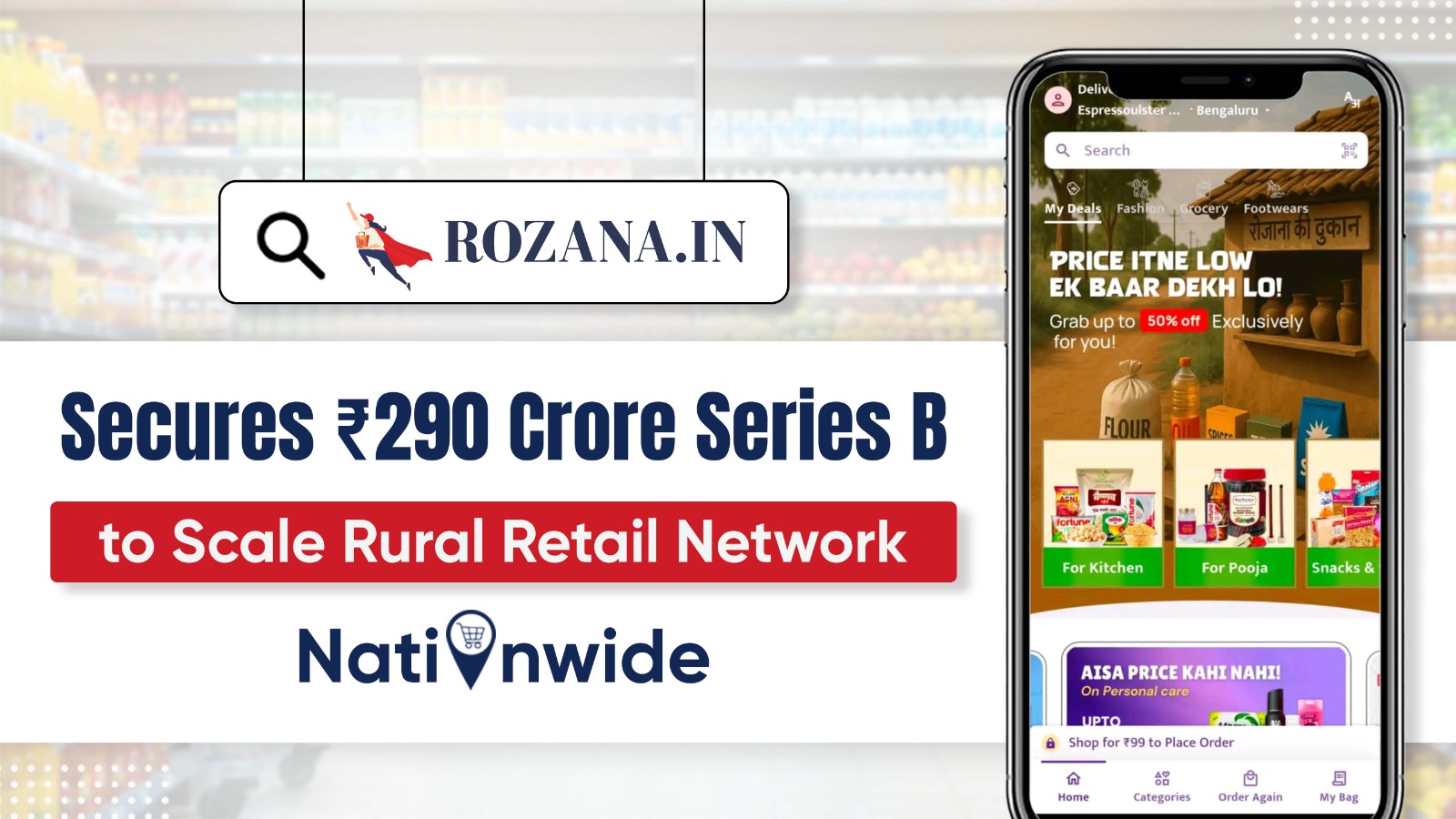
Secures ₹290 Crore Series B To Scale Rural Retail Network

How Pilgrim Achieved 24x Growth In The Beauty Industry?
Quick commerce started as a solution to a simple problem: getting essentials to your door in ten minutes. What nobody fully anticipated was that in solving that problem, these platforms would accidentally build one of the most valuable advertising surfaces in the country.
The 10-minute delivery market is worth approximately $6 Bn today and is projected to reach $35 to $40 Bn by 2030. Gross order value across quick commerce platforms jumped from $3.1 Bn in 2023 to $7.4 Bn in 2025. More tellingly, at least 42% of people living in Tier I cities now use 10-minute delivery for everyday household needs, not as an occasional convenience but as a default habit.
When users return to an app multiple times a week, every single time with buying intent, that app stops being a logistics tool. It becomes an attention surface. And attention surfaces attract marketers.
Why Quick Commerce Beats Social Media for Advertisers
Social media platforms have long been the dominant channel for digital advertising. But there is a fundamental problem with the model that quick commerce is beginning to expose.
"On social media, the default user mode is entertainment, leading to high ad fatigue and sub-1% click-through rates," says Umair Mohammad, founder of Nitro Commerce, an AI-based marketing services startup. "A user opens a quick commerce app to complete a specific task or fix a last-minute need. Because the context is inherently transactional, the platforms can place sponsored tiles, bundles, and in-cart prompts right next to an active basket."
That distinction matters enormously. An ad shown to someone passively scrolling through entertainment content competes with everything else on the screen. An ad shown to someone who has already opened a shopping app with a list in mind is talking to a person who is ready to buy.
Quick commerce platforms also hold something that social media cannot match: rich, deterministic first-party data. Every order generates hard signals: which category was purchased, what time of day, what basket size, and which neighbourhood the order came from. Users return multiple times a month, and each session adds to a profile that is tied to a real address and backed by an actual transaction.
As third-party cookies fade and social media returns on ad spend ebb, that data becomes increasingly valuable. Quick commerce platforms know not just who is buying, but what they buy regularly, when they buy it, and where they live.
The Numbers Behind the Shift
The advertising industry has begun to notice.
Ad spends on India's big three quick commerce platforms, Blinkit, Zepto, and Swiggy Instamart, jumped from Rs 1,325 Cr to Rs 4,000 Cr in 2025, a 202% surge in a single year. Projections point to Rs 6,000 Cr by 2026, implying another 50% growth.
Quick commerce media networks are on course to grow at an average of 21% between 2023 and 2027. Retail media, which already commands a significant slice of the digital advertising pie, is seeing its sharpest growth from this category.
These numbers signal that brands are no longer treating quick commerce as an add-on channel. It is becoming a primary revenue engine that sits as close to the point of sale as any advertising format ever has.
For brands, this compression changes the strategic logic entirely. Purchasing decisions on quick commerce platforms are made in seconds, based on the top search results and the first few rows of a category page. Whoever dominates those slots consistently builds mindshare and category share in a way that traditional cost-per-click metrics cannot fully capture.
"In quick commerce, your share of those prime impressions tracks much closer to your actual share of the market than CPC does in this compressed environment," Mohammad explains.
The Risk: When Ads Break the Experience
The opportunity is real, but so is the risk.
When brands with no connection to groceries start advertising on a quick commerce platform, the results can backfire. Non-endemic ads, those placed by brands that do not sell their products on the platform but use its data to reach relevant audiences, can slow the app down, disrupt the seamless shopping experience that is the platform's core strength, and simply feel out of place in a way that damages user trust.
"Anything that slows the user down on a platform which they use to complete tasks in minutes risks lower engagement and high drop-off," Mohammad cautions.
The solution, he argues, is tighter contextual rules rather than blanket restrictions. Financial services ads served only on high-value baskets. Telecom ads triggered by heavy digital consumption signals. All of it integrated into native, low-friction placements like post-purchase confirmation screens rather than intrusive interruptions mid-shopping.
The next phase of growth in quick commerce advertising will not be defined by how many brands can squeeze into the feed. It will be defined by how intelligently the platforms balance relevance, speed, and user trust.
Where Nitro Commerce Fits In
Executing on that balance requires infrastructure that most brands do not have and most platforms do not want to build themselves.
This is where Nitro Commerce and its AI platform Zodiac come in.
Zodiac functions as an AI co-pilot for brands navigating the quick commerce advertising landscape. It stitches together sales, inventory, and advertising signals into unified shopper and SKU-level profiles, allowing brands to identify performance patterns across dark stores and quick commerce platforms without relying on fragmented dashboards or manual reporting.
The platform has four integrated layers: identity resolution, intent-led media, agentic engagement, and real-time retention. Together, they allow brands to respond dynamically to user behaviour, whether someone has browsed, dropped off, or returned for a second purchase.
"The moment a user browses, drops off, or comes back for a second purchase, Nitro knows what to do next," Mohammad says.
For platforms themselves, building this infrastructure from scratch is expensive and distracting. Identity graphs, audience managers, billing systems, reporting tools, and compliance infrastructure are all slow and capital-intensive to develop internally.
"Nitro provides these primitives as ready-to-use modules," Mohammad explains, freeing platforms to focus on their core strengths in logistics and assortment.
Vyapaarवाणी Takeaway : The Most Valuable Advertising Is the Kind That Feels Useful
Quick commerce has demonstrated something that media buyers and brand strategists have long suspected: context is the most powerful targeting parameter of all.
An ad shown at the right moment, to the right person, in the right frame of mind, does not feel like an intrusion. It feels like a suggestion. Quick commerce platforms, with their high-frequency usage and rich transactional data, are uniquely positioned to deliver that experience at scale.
The brands that will win in this environment are not the ones that spend the most on quick commerce advertising. They are the ones that understand the context of the platform deeply enough to show up in a way that adds value rather than friction.
For D2C brands and retail marketers watching this space, the message is clear: quick commerce is no longer just a distribution channel. It is a visibility engine, a brand-building surface, and increasingly, the place where purchase decisions are made and market share is won.
Stay tuned for more stories on India's most ambitious builders in Vyapaar वाणी!
Connect With Us
For Any Inquiries Or Assistance, Please Feel Free To Reach Out. Our Team Is Here To Support You And Will Respond At The Earliest Convenience